Who Decides What Your Listing Photos Should Show?
Every listing has a photographer. Many have a stager. But ask who’s responsible for the overall editorial direction of the listing photos, meaning what the photos should say about the home and who they’re saying it to, and the answer is usually nobody in particular.
The photographer captures the rooms. The stager furnishes them. The agent juggles the seller, the pricing, the paperwork and the launch date. Each person does their part well. But the question of what story the photos tell tends to fall in the gaps between them.
The missing role in listing preparation
At a magazine, that question had an owner. Before a single shot was taken, an editor decided what the story was, which rooms carried it, what stayed in the frame and what came out. The photographer and stylist executed a plan. They didn’t have to invent one on the spot.
Listing preparation rarely works that way. The photographer arrives, walks the house, and shoots what’s there, usually on a tight schedule and often for a set fee per home. That’s not a criticism. It’s the job they were hired to do. Deciding how the home should be presented to a buyer is a different job, and it usually happens by default rather than by design.
Photographing every room isn’t the same as presenting the property
A complete set of photos documents a house. It doesn’t necessarily present it.
Documenting means every room, well lit, straight verticals. Presenting means deciding which features the buyer should notice first, and arranging each room so the camera finds them. It’s the difference between “here’s the living room” and “here’s the fireplace you’ll gather around every winter.”
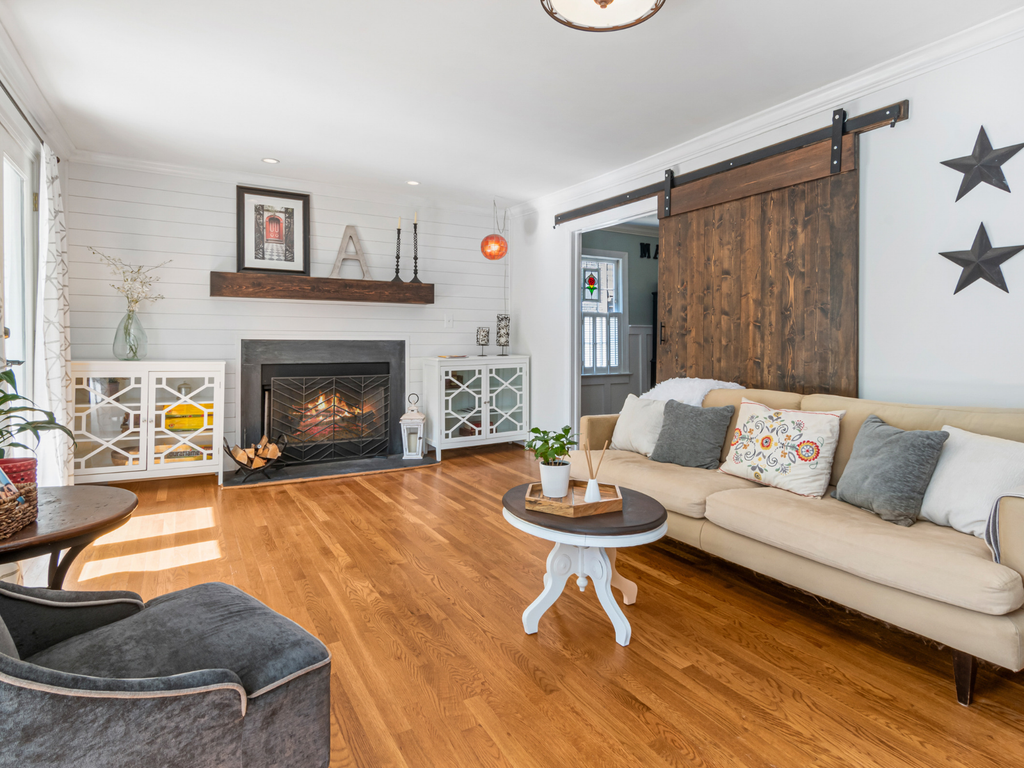
Look at this living room. The bones are good: a brick fireplace, a reclaimed barn door, wood floors. But the furniture is lined up against the walls, as it is in most homes, because that’s what makes daily traffic easy. The fireplace is in the frame, but nothing in the room points to it. A buyer scrolling past sees a room. They don’t see a reason to stop.
Understanding the likely buyer first
Before choosing how a room should look, I ask who’s most likely to buy the house. A young family, a downsizing couple and a first-time buyer working from home all respond to different cues.
That doesn’t mean redesigning the house for a demographic. It means making a few deliberate choices: a reading chair instead of a toy bin, a dining table set for six instead of eight, a desk that shows the spare room works as an office. Small decisions in the photos tell the right buyer this house already fits their life.
Why generic staging doesn’t always connect
Staging helps, and I’d never tell an agent to skip it when the budget allows. But staging built from a warehouse of neutral pieces can produce rooms that look pleasant and say nothing. Gray sofa, white throw, a bowl of green apples. Buyers have seen that room a thousand times.
Emotional connection usually comes from specificity: a room arranged around its best feature, a palette pulled from the view outside, one piece with some history to it. Those choices are editorial, not just decorative.
What a listing presentation designer contributes
That’s the role I fill. A listing presentation designer sets the editorial direction for the listing photos before they’re taken: which rooms matter most, what each one should emphasize, what stays, what goes, and how the furniture should sit so the camera finds the room’s best feature.
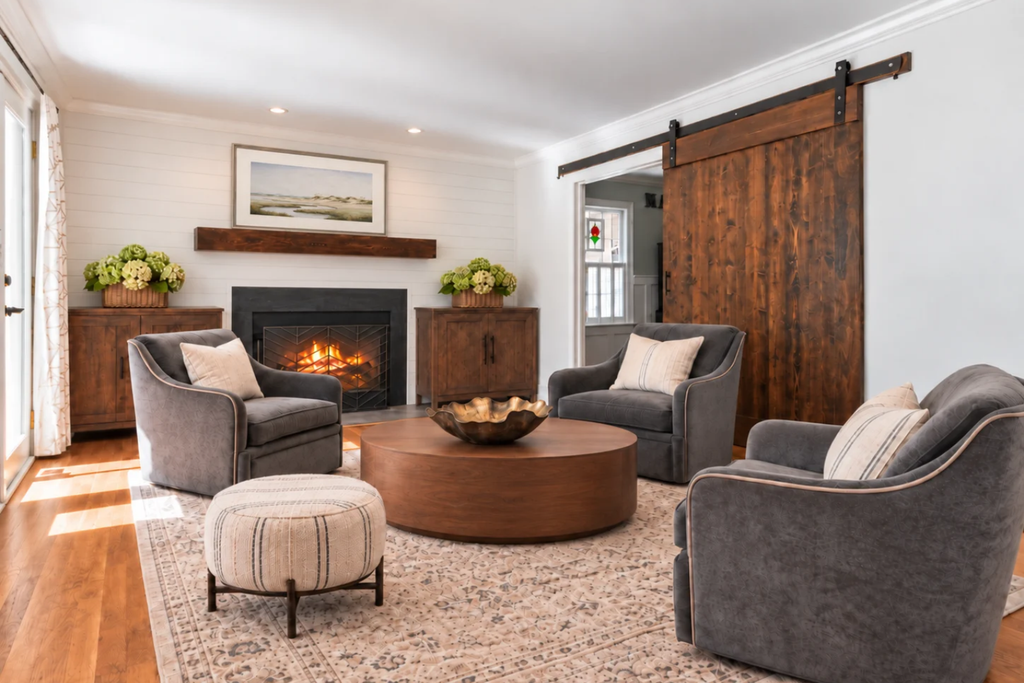
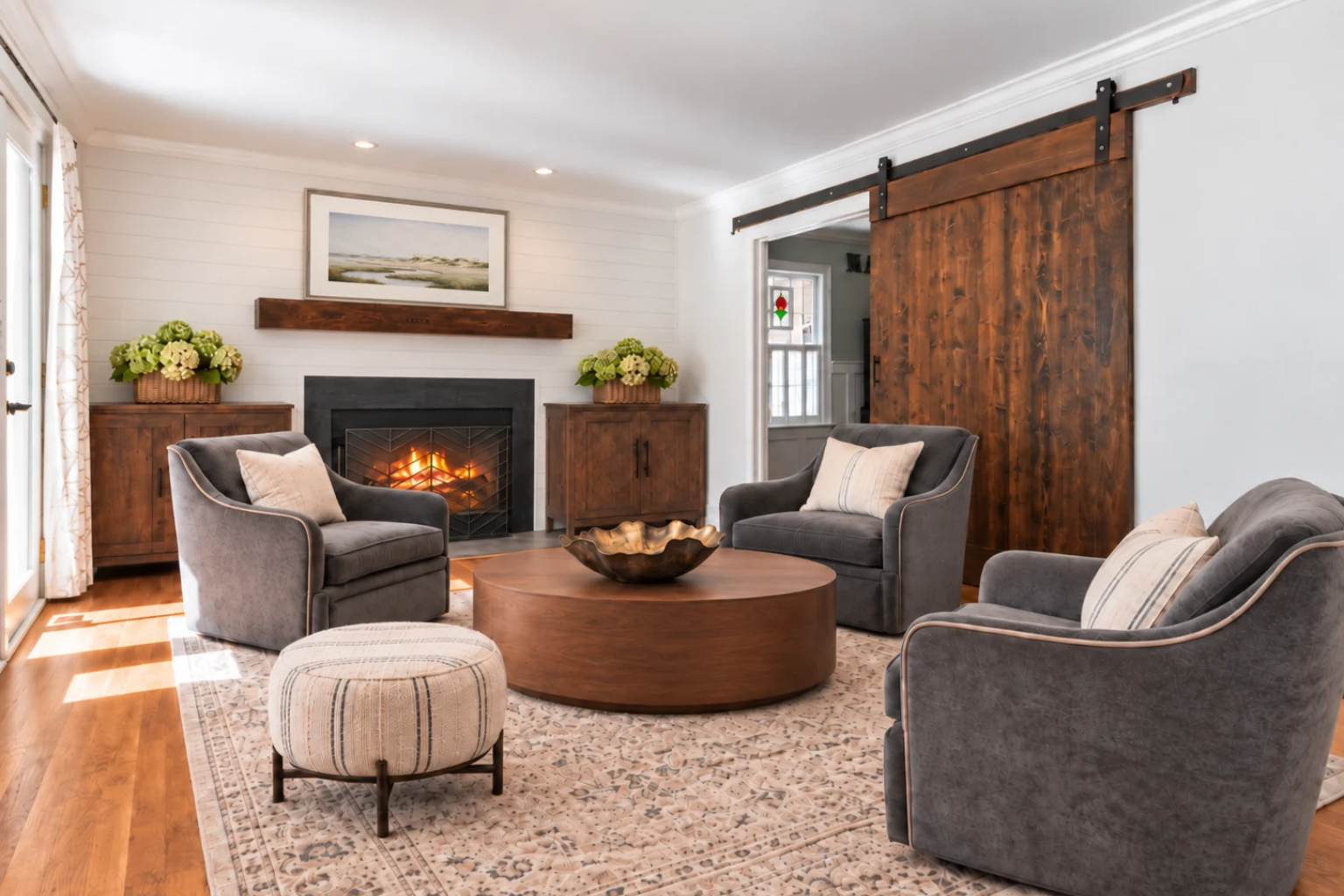
Here’s the same living room. Nothing about the architecture changed. The seating turned to face the fireplace, three of the owner’s chairs (only partially visible in the original photo) and a round table created a conversation area, and a rug pulled the group together. Now the fireplace is the subject of the photo, not just something in it.
Arrangement: The chairs frame the hearth, so the eye travels to it.
Scale: A rug sized to hold the whole seating group makes it read as one room rather than scattered furniture.
Styling: Fewer objects on and around the mantel, so the fireplace reads clearly at listing-photo size. Overly ornate white case goods that distract from the fireplace are replaced with wood tones to balance out the weight of the fireplace.
How Magazine Worthy helps before photography
The best time to decide how a home should be presented is before the photographer is booked. Often it’s before the listing is even signed.
That’s the idea behind the Second Appointment. At your first meeting with the seller, take phone photos of the room that matters most, usually the living room or the room with the home’s best feature. Send them to me, and within a day you’ll have a redesigned view of that room, arranged and styled for the camera around the seller’s own furniture, plus a glossy print to bring back.
Then walk into your second appointment with something no other agent is holding: a picture of how their home will be presented, not a stack of comps and a marketing checklist. You’re not promising better photos. You’re showing them.
Once you’ve won the listing and the professional photos come back, I can review the full set before it goes live, so nothing slips through.
You stay in charge of the listing. I just make sure someone owns the question of what the photos should say.